|
parameters
|
symbol
|
unit
|
minimum
|
typical
|
maximum
|
|---|---|---|---|---|---|
|
parameters
operating wavelength (at Top, Iop)
|
symbol
λop
|
unit
nm
|
minimum
|
typical
1560, 1570, 1580 & 1590
|
maximum
|
|
parameters
optical output power (at λop)
|
symbol
Pop
|
unit
mW
|
minimum
|
typical
8
|
maximum
|
|
parameters
operating current
|
symbol
Iop
|
unit
mA
|
minimum
|
typical
70
|
maximum
|
|
parameters
operating voltage
|
symbol
Vop
|
unit
V
|
minimum
|
typical
2
|
maximum
|
|
parameters
threshold current
|
symbol
Ith
|
unit
mA
|
minimum
10
|
typical
15
|
maximum
25
|
|
parameters
side mode suppression ratio
|
symbol
SMSR
|
unit
dB
|
minimum
|
typical
> 35
|
maximum
|
|
parameters
current tuning coefficient
|
symbol
CI
|
unit
nm / mA
|
minimum
0.008
|
typical
0.012
|
maximum
0.020
|
|
parameters
temperature tuning coefficient
|
symbol
CT
|
unit
nm / K
|
minimum
0.08
|
typical
0.11
|
maximum
0.13
|
|
parameters
operating chip temperature
|
symbol
Top
|
unit
°C
|
minimum
+20
|
typical
+30
|
maximum
+45
|
|
parameters
operating case temperature (non-condensing)
|
symbol
TC
|
unit
°C
|
minimum
-20
|
typical
+25
|
maximum
+55
|
|
parameters
storage temperature (non-condensing)
|
symbol
TS
|
unit
°C
|
minimum
-40
|
typical
+20
|
maximum
+80
|
H2S occurs as a corrosive, toxic and explosive side product in the petrochemical industry. Continuous monitoring of this hazardous compound is critical to avoid corrosion of natural gas pipelines and ensure workers safety. Real-time analysis is essential to guarantee that burning fuels are H2S clean in order to prevent acid rains.
[ 76 , 69 , 3 ]
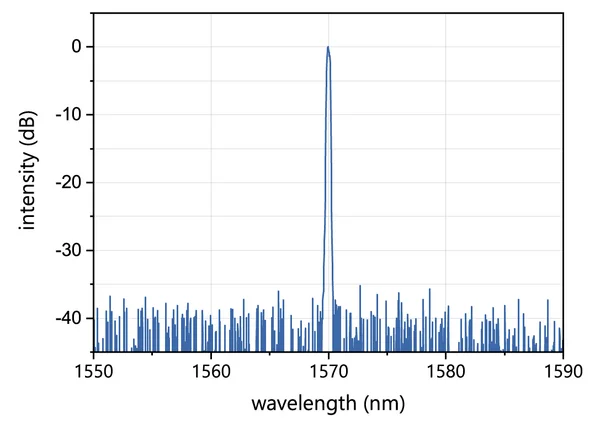
Typical spectrum of a nanoplus 1570 nm distributed feedback laser diode
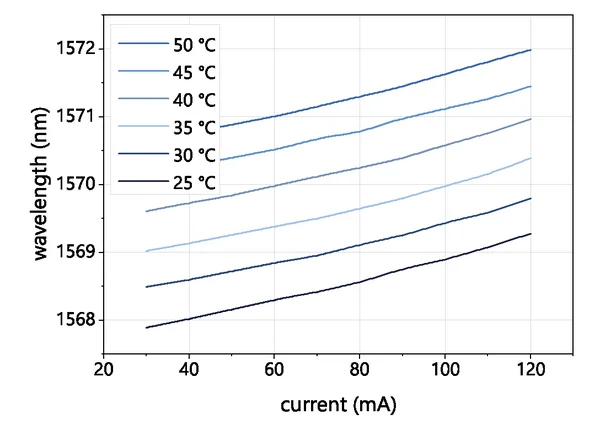
Typical mode hop free tuning of a nanoplus 1570 nm distributed feedback laser diode
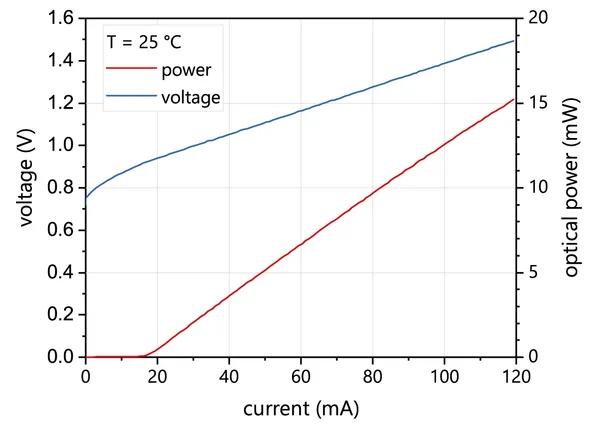
Typical power, current and voltage characteristics of a nanoplus 1570 nm distributed feedback laser diode